
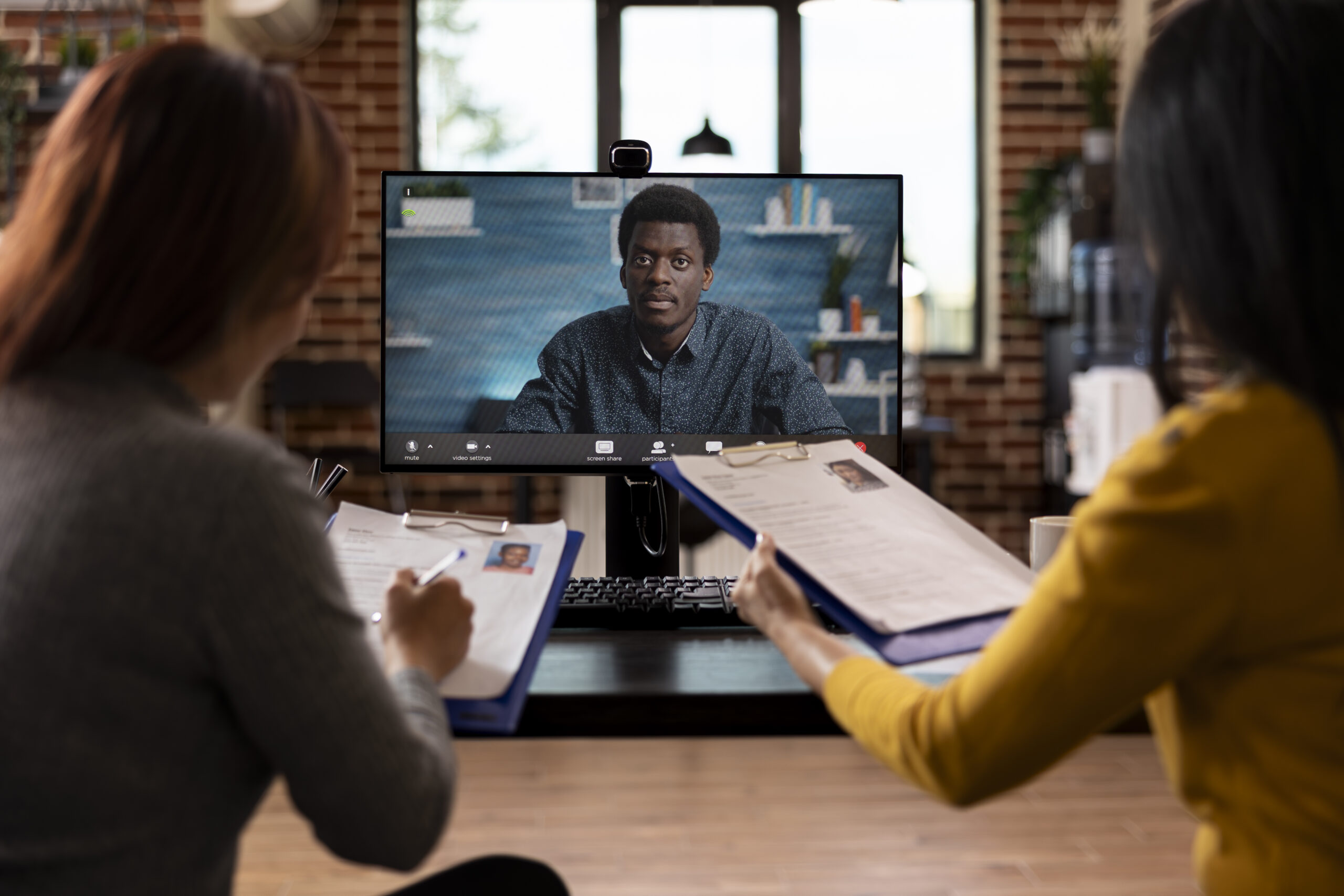
Imagine receiving an email from a company in the United Kingdom, Canada, Germany, Australia, or another country inviting you to an online interview. You have been searching for an international opportunity for weeks, and now an employer wants to speak with you.
It is exciting news. However, once the excitement settles, questions may begin to surface. What will the interviewer ask? How should you dress? What if your internet connection fails? How do you explain your experience confidently when speaking to an employer thousands of kilometres away?
If you are preparing for an international job interview online, these concerns are perfectly understandable. An online interview requires many of the same preparations as a traditional interview, but it also introduces additional challenges. You must consider your technology, interview environment, communication style, time-zone differences, and ability to present yourself professionally through a screen.
The good news is that you can prepare for these challenges before the interview begins. You do not need an expensive home office or sophisticated equipment to make a good impression. What matters most is understanding the role, communicating your value, and ensuring that technical problems do not distract from your abilities.
This guide explains how to prepare for an international job interview online, answer common questions confidently, avoid common mistakes, and follow up professionally after the meeting.
1. Understand the International Online Job Interview Format
Before preparing your answers, find out what kind of interview the employer has scheduled. Not every online interview follows the same format, and knowing what to expect can help you prepare appropriately.
There are three common types.
Live video interviews
A live video interview takes place in real time. You meet the recruiter, hiring manager, or interview panel through a video conferencing platform.
The interviewer asks questions, listens to your responses, and may ask follow-up questions based on what you say.
Platforms may include Zoom, Microsoft Teams, Google Meet, or another service selected by the employer.
For this type of interview, you should practise having a natural conversation rather than memorising a speech.
Pre-recorded video interviews
In a pre-recorded interview, you answer questions by recording yourself. You may be given a limited amount of time to prepare and record each response.
Some systems allow you to record again, while others do not. Follow the instructions carefully before starting.
Practise speaking directly to the camera, organising your answers, and completing your responses within the allotted time.
Technical or skills-based online interviews
Some employers use online interviews to assess practical abilities. A software developer may be asked to solve a coding problem, while an accountant may need to explain a financial scenario.
A marketing professional might be asked to analyse a campaign, and a customer service applicant could be given a simulated customer complaint.
For these interviews, review the technical skills and responsibilities listed in the job advertisement. If you are asked to complete a practical assessment, understand the instructions and confirm whether you are permitted to use reference materials.
Your first task is simple: confirm the interview format, platform, duration, and any special instructions before you begin preparing.
2. Research the Company Before Your International Online Job Interview
One of the most important parts of interview preparation happens before you switch on your camera.
Employers want to know whether you understand their organisation, the position, and the contribution you could make. If you know little about the company, your answers may sound generic, even when you have the right qualifications.
Start by researching the following areas.
Understand what the company does
Visit the company’s official website and learn about its products, services, customers, and business activities.
If the organisation has offices in different countries, understand which location the role supports. A company may operate internationally but hire for a position serving a specific market.
You should also check the company’s official careers page to confirm that the vacancy is genuine.
Study the job description carefully
Read the job advertisement more than once. Identify the main responsibilities and qualifications.
Pay attention to phrases such as:
- Experience managing customer relationships.
- Ability to work independently.
- Strong analytical and communication skills.
- Experience with particular software or systems.
- Ability to manage deadlines and competing priorities.
- Knowledge of industry regulations or professional standards.
These details can help you predict the areas the interviewer is likely to explore.
For example, if a vacancy emphasises problem-solving, prepare an example of a problem you identified, the action you took, and the outcome.
Learn about the company’s values and working culture
Look for information about the company’s mission, working arrangements, leadership principles, and approach to teamwork.
You do not need to memorise every page of the website. Focus on information that helps you explain why the organisation interests you.
Avoid claiming that the company is your dream employer if you cannot explain why. A specific, honest reason is more convincing than exaggerated praise.
Prepare a clear answer to “Why do you want to work here?”
Your answer should connect three things:
- Something meaningful about the organisation.
- What interests you about the position.
- How your skills or experience relate to the opportunity.
For instance, a candidate applying for a customer support role could explain that the position appeals to them because it combines customer communication with problem-solving, two areas in which they have developed practical experience.
This demonstrates that you have considered the role rather than applying simply because it is based abroad.
3. Prepare Your Answers for an International Online Job Interview
You cannot predict every question an interviewer will ask. However, you can prepare for common questions and organise examples that demonstrate your abilities.
The objective is not to memorise perfect answers. It is to become comfortable explaining your experience clearly and accurately.
Prepare your professional introduction
Many interviews begin with a question such as, “Tell me about yourself.”
This is an opportunity to introduce your professional background, relevant experience, and interest in the position.
A useful structure is:
- Present: Explain your current professional role or area of expertise.
- Past: Mention relevant experience, education, or achievements.
- Future: Explain how the opportunity connects with your career direction.
For example:
“I am a customer service professional with experience handling customer enquiries, resolving complaints, and maintaining customer records. In my previous role, I developed strong communication and problem-solving skills while working with different types of customers. I am now interested in bringing those skills to an international organisation where I can contribute to customer satisfaction and continue developing professionally.”
Adapt the example to your actual experience. If you are a recent graduate, focus on relevant coursework, internships, volunteering, projects, or transferable skills.
Keep your introduction focused. You do not need to tell your entire life story.
Practise common international job interview questions
Prepare thoughtful answers to questions such as:
- Tell me about yourself.
- Why are you interested in this position?
- What do you know about our company?
- What are your greatest professional strengths?
- What is an area you are working to improve?
- Tell me about a challenge you faced at work.
- Describe a time you worked with a difficult customer or colleague.
- Why should we hire you?
- How do you manage pressure and competing deadlines?
- What are your salary expectations?
- When could you start?
- What are your long-term career goals?
For each question, identify the main point you want the interviewer to understand. Support your answer with a relevant example where possible.
Use the STAR method for behavioural questions
Employers often ask behavioural questions to understand how you handled situations in the past.
The STAR method helps you structure your response:
- Situation: Describe the circumstances.
- Task: Explain what you needed to accomplish.
- Action: Describe what you personally did.
- Result: Explain the outcome.
Suppose an interviewer asks you to describe a time you resolved a customer complaint.
You could briefly explain the problem, your responsibility for resolving it, the steps you took to understand the customer’s concern, and the outcome.
The result does not always need to be a financial achievement. It could be a resolved complaint, improved process, reduced delay, or stronger working relationship.
The important thing is to show how you approached the situation.
For more detailed guidance, the UK National Careers Service provides official advice on preparing for video interviews, including practising questions, researching employers, and using the STAR method.
4. Prepare Your CV and Achievements for an International Online Job Interview
The interviewer may have already reviewed your CV, but you should still keep a copy nearby.
Review every claim in your application. Be ready to explain your responsibilities, qualifications, employment dates, and achievements.
If you mention a project, think about what the project involved and your personal contribution. If you list a technical skill, prepare to explain how you have used it.
A strong interview answer should be consistent with the information in your application.
Focus on evidence rather than general claims
Consider the difference between these statements:
General: “I am good at sales and customer relations.”
More specific: “In my previous role, I followed up with prospective customers, answered product enquiries, and maintained communication throughout the sales process.”
The second statement gives the interviewer a clearer picture of your experience.
Where you have reliable figures, use them to demonstrate your contribution. For example, you might explain how you helped increase customer retention or improve response times.
Do not invent figures or exaggerate your responsibilities. Employers may ask follow-up questions to understand how the results were achieved.
Keep relevant documents within reach
Depending on the role, you may want to have copies of:
- Your CV.
- The job description.
- Your cover letter.
- A list of relevant achievements.
- Your educational and professional qualifications.
- A portfolio or project samples.
- Questions you want to ask the interviewer.
Keep these materials organised so that you can find information quickly without shuffling through papers or repeatedly looking away from the camera.
If the employer asks to see a document, share only what is requested through the agreed channel.
5. Test Your Internet Connection and Equipment Before the Interview
A strong interview performance can be disrupted by avoidable technical problems. Your camera may fail, your microphone may produce an echo, or your internet connection may become unstable.
You cannot eliminate every technical risk, but you can reduce the likelihood of common problems.
Choose a reliable device
A laptop or desktop computer is often convenient because it provides a larger screen and makes it easier to view the interviewer while accessing your notes.
However, a smartphone can also work if the employer permits it and you can position it securely.
Whichever device you choose, make sure that:
- The camera works.
- The microphone captures your voice clearly.
- The speakers or headphones function properly.
- The device is fully charged or connected to power.
- The required video conferencing application is installed or accessible.
- You know how to join the meeting and use its basic controls.
Do not wait until the interview begins to learn how to use the platform.
Test your internet connection
Conduct a test call with a friend or colleague. Check whether the video and audio remain stable during the conversation.
If your connection is unreliable, consider a backup option, such as a second network or mobile data, where available.
For candidates in Nigeria, it may also be useful to identify a quiet alternative location with reliable connectivity in case the connection at home becomes unstable.
If you plan to use a public workspace, confirm that it offers enough privacy and that background noise will not interfere with the interview.
Prepare for a power interruption
Where electricity supply may be unreliable, plan ahead.
Depending on your circumstances, you might:
- Charge your laptop and phone fully.
- Use a charged power bank for a compatible phone.
- Arrange access to backup power.
- Identify an alternative location with electricity and reliable internet.
- Keep the interviewer’s contact details accessible.
If a technical problem occurs despite your preparation, communicate promptly and professionally rather than disappearing without explanation.
Close unnecessary applications
Before joining the interview:
- Close applications that use excessive internet bandwidth.
- Shut down unnecessary browser tabs.
- Silence notifications.
- Disable distracting alerts.
- Confirm that the correct microphone and camera are selected.
- Keep the meeting link easy to access.
These small steps can make the experience smoother and help you concentrate on the conversation.
6. Set Up a Professional Space for Your International Online Job Interview
You do not need a luxurious office to interview successfully. A quiet, clean, and well-lit corner can be enough.
The objective is to help the interviewer see and hear you clearly without unnecessary distractions.
Choose a quiet location
Find a place where you can speak comfortably and hear the interviewer.
If you share your home with family members or housemates, let them know the interview time. Ask them to avoid interrupting you if possible.
Turn off televisions, radios, and other sources of background noise.
If your environment is not suitable, consider arranging a private room elsewhere.
Check your background
A plain wall or tidy room is usually sufficient. Remove distracting objects from the camera’s view.
If you use a virtual background, test it beforehand. Poorly rendered backgrounds can cause parts of your appearance to disappear or look unnatural.
A real, tidy background is often the simplest option.
Position the camera correctly
Place the camera at approximately eye level. If your laptop sits too low, use a stable stand or a few sturdy books to raise it.
Position yourself so that your head and shoulders are clearly visible, with enough space around your face.
Avoid holding your phone throughout the interview because movement can distract the interviewer.
Use suitable lighting
Position a light source in front of you or slightly to one side so that your face is visible.
Avoid sitting directly in front of a bright window with your back to the light. This can make your face appear dark.
Natural light can work well, but a lamp may be useful when interviewing early in the morning or late in the evening.
Before the meeting, open the camera and check how you appear on screen.
7. Dress Professionally for an International Online Job Interview
Your clothing contributes to the impression you make, even when the interview takes place online.
Choose an outfit that is appropriate for the role and company. When you are uncertain about the dress code, neat business or smart-casual clothing is generally a sensible starting point.
Consider the following:
- Wear clean, well-fitting clothes.
- Choose colours that look clear on camera.
- Avoid distracting patterns where possible.
- Keep accessories simple.
- Ensure your hair and overall appearance are neat.
- Wear an outfit that allows you to sit comfortably throughout the meeting.
You do not need to purchase an expensive outfit just for an online interview. Use what you have, provided it is clean, presentable, and appropriate.
It is also sensible to dress professionally beyond the part of your body visible on camera. You may need to stand up unexpectedly or adjust your equipment during the interview.
Most importantly, choose clothing that allows you to concentrate on answering questions rather than worrying about your appearance.
8. Manage Time Zones for an International Online Job Interview
Time-zone confusion is a simple mistake that can create a poor first impression.
If the employer is in another country, the interview invitation may specify a time in the recruiter’s local time zone, your local time zone, or a time zone identified by its abbreviation.
Do not assume the stated time is Nigerian time.
Confirm the interview time
Check the invitation carefully. If the time zone is unclear, ask the recruiter to confirm it.
Use a reliable time-zone converter and check the date as well as the time. Some countries change their clocks seasonally, so the difference between Nigeria and the interviewer’s location may not remain constant throughout the year.
Add the interview to your calendar with the correct time and a reminder.
Plan your schedule around the interview
If the interview takes place early in the morning or late at night in Nigeria, make arrangements beforehand.
Consider your sleep, transport, work commitments, and access to a quiet location.
Avoid scheduling another important activity immediately before the interview. Give yourself enough time to settle down, check your equipment, and review your notes.
Join the meeting early
Aim to be ready about 10–15 minutes before the scheduled time. You can use this period to check your camera, microphone, lighting, and meeting link.
You do not necessarily need to enter the meeting room very early if the employer has not opened it. The important thing is to be prepared and available when the interview starts.
9. Communicate Clearly During an International Online Job Interview
An online interview can make communication feel different from a face-to-face conversation. You may notice delays, reduced visual feedback, or difficulty knowing when the other person has finished speaking.
The solution is to communicate clearly and allow the conversation to develop naturally.
Speak at a comfortable pace
Do not rush through your answers because you are nervous.
Speak clearly, complete your thoughts, and pause briefly after the interviewer finishes asking a question. This can help prevent both of you from speaking at the same time because of a slight connection delay.
If you do not understand a question, politely ask the interviewer to repeat or clarify it.
Maintain natural eye contact
During a video interview, looking directly at the interviewer’s face on the screen may make it appear as though you are looking slightly away from them.
When answering, try to look at the camera periodically. When listening, look at the screen so you can follow the conversation.
You do not need to stare continuously into the camera. Aim for natural engagement.
Use professional language
Avoid slang or overly casual expressions unless the conversation naturally allows them.
You do not need to imitate an accent from another country. Clear communication is more important than trying to sound like someone else.
If you are concerned about your spoken English, practise explaining your experience aloud before the interview. Focus on clarity, pronunciation, and organising your thoughts.
Be aware of cultural differences
International employers may have different expectations about communication, feedback, hierarchy, teamwork, and workplace etiquette.
Research the company’s culture, but avoid making assumptions about every person from a particular country.
For example, some interviewers may prefer concise answers, while others may ask detailed follow-up questions. Pay attention to the interviewer’s communication style and respond professionally.
If you disagree with a question or need more information, explain your position respectfully.
10. Ask Intelligent Questions During an International Online Job Interview
An interview is not only an opportunity for an employer to assess you. It is also a chance for you to decide whether the position is suitable for your goals and circumstances.
When the interviewer asks whether you have any questions, avoid automatically saying no.
Prepare a few thoughtful questions about the role.
You could ask:
- What would success look like during the first three months?
- What are the main priorities for the person taking this position?
- How is the team organised?
- What tools or systems does the team use?
- How is performance evaluated?
- What training or professional development is available?
- What are the next steps in the recruitment process?
Choose questions that have not already been answered during the interview.
Questions about salary and benefits
It is reasonable to seek clarity about compensation, working hours, leave, and other employment conditions.
The appropriate time to discuss these details depends on the interview stage and the employer’s process.
If the recruiter raises salary expectations, provide a considered answer based on the role, your experience, and relevant market information. If you are unsure of the range, you can ask whether the employer has a budgeted salary range for the position.
Questions about relocation and work authorisation
For international roles, it may also be necessary to clarify whether the position is open to overseas applicants and whether the employer supports the relevant work authorisation process.
If sponsorship has not been discussed, you can ask the recruiter about the company’s policy for candidates who require permission to work in the destination country.
Do not assume that an international job offer automatically includes visa sponsorship, relocation assistance, accommodation, or travel expenses.
These details should be confirmed before you make financial commitments.
11. Prepare for Common International Online Job Interview Challenges
Even when you prepare carefully, unexpected situations can occur. Knowing how to respond can help you remain composed.
| Possible challenge | What to do |
|---|---|
| Internet connection becomes unstable | Explain the problem, try your backup connection, and ask whether you can reconnect. |
| Microphone stops working | Check the selected audio device, reconnect your headphones, or use an agreed backup device. |
| You cannot hear the interviewer | Politely explain the problem and ask them to repeat the question after the sound is restored. |
| You do not understand a question | Ask for clarification rather than guessing what the interviewer means. |
| You forget part of your answer | Pause, collect your thoughts, and continue with the most relevant point. |
| The interviewer asks about an unfamiliar skill | Be honest about your experience and explain how you would approach learning or solving the problem. |
| You are interrupted by background noise | Apologise briefly, address the interruption if possible, and return your attention to the interview. |
| You experience a complete connection failure | Rejoin using the meeting link or contact the interviewer through the agreed alternative channel. |
If a technical issue prevents you from continuing, send a short, professional message explaining what happened and asking whether the interview can resume or be rescheduled.
Avoid sending multiple emotional messages or blaming the interviewer for the problem.
12. Practise Before Your International Online Job Interview
Reading interview tips is useful, but practising aloud helps you discover problems that may not be obvious when you are preparing silently.
You may notice that your answers are too long, you speak too quickly, or you repeatedly use vague expressions.
A practice interview can help you improve these areas.
Conduct a mock interview
Ask a friend, colleague, or mentor to interview you using questions relevant to the role.
If possible, use the same video conferencing platform planned for the real interview.
Practise answering questions without reading a script. Ask the person conducting the mock interview to give honest feedback on your clarity, confidence, and examples.
Record yourself
If you are comfortable doing so, record a short practice session and review it.
Pay attention to:
- Whether your answers address the questions.
- Whether you speak clearly.
- Whether your pace is comfortable.
- Whether you use distracting filler words.
- Whether your camera angle is suitable.
- Whether your background and lighting are appropriate.
- Whether your examples demonstrate relevant skills.
You do not need to eliminate every pause or gesture. The goal is to communicate naturally and professionally.
Practise without memorising every word
Memorised answers can sound unnatural, especially when the interviewer asks a question differently from what you expected.
Instead, prepare key points and relevant examples.
For instance, if you expect to discuss your greatest achievement, identify the achievement, your role, the action you took, and the result. Practise explaining it in different ways.
This will help you adapt your answer to the conversation.
13. Prepare for a One-Way International Online Job Interview
Some employers use one-way video interviews to screen candidates before arranging live conversations.
In this format, you receive questions on screen and record your responses without speaking to an interviewer in real time.
It can feel unusual because you receive no immediate feedback from another person.
To prepare:
- Read the instructions before beginning.
- Confirm the deadline and any time limits.
- Check whether you can practise, pause, or re-record your answers.
- Test your camera and microphone.
- Find a quiet location.
- Keep your answers focused on the question.
- Look toward the camera when speaking.
- Leave enough time to complete the interview before the deadline.
If you are given 60 seconds to answer a question, practise delivering the main point and one supporting example within that time.
Do not spend the entire response introducing yourself if the question asks you to describe a specific achievement.
Treat the recording as a conversation with a future colleague, even though the interviewer is not present.
14. Follow Up After Your International Online Job Interview
Your preparation should not end when the video call finishes.
A brief follow-up message can reinforce your interest and thank the interviewer for their time.
If appropriate, send a concise email within a day of the interview. Personalise it rather than sending a generic message that could apply to any company.
For example:
“Dear [Interviewer’s Name],
Thank you for taking the time to discuss the [Job Title] position with me. I appreciated learning more about the role and the team’s priorities.
Our conversation strengthened my interest in the opportunity, particularly the work involving [specific responsibility discussed]. I believe my experience in [relevant skill or area] would allow me to contribute positively to the team.
Thank you again for your time. I look forward to hearing from you regarding the next steps.
Kind regards,
[Your Name]”
Keep the message professional and accurate. Do not claim that the interview went perfectly or repeatedly ask for a decision immediately after the meeting.
If the interviewer provided a timeline, respect it. If that timeline passes without an update, a polite follow-up is reasonable.
Regardless of the outcome, reflect on the experience. Write down the questions you found difficult, the answers that went well, and the areas you want to improve before your next interview.
15. International Online Job Interview Checklist: What to Do Before Joining
Use this checklist on the day of your interview.
Interview preparation
-
I have read the job description carefully.
-
I have researched the employer.
-
I can explain why I want the position.
-
I have prepared my professional introduction.
-
I have practised answers to common questions.
-
I have examples that demonstrate my skills and achievements.
-
I have prepared questions for the interviewer.
Technical preparation
-
My device is charged or connected to power.
-
My internet connection is working.
-
My camera and microphone have been tested.
-
I know how to join the meeting.
-
I have the correct meeting link.
-
I have a backup plan for technical problems.
-
Unnecessary notifications and applications are closed.
Environment and presentation
-
I have chosen a quiet location.
-
My background is clean and professional.
-
My face is clearly visible.
-
My camera is at a suitable height.
-
I am wearing appropriate clothing.
-
I have my CV and relevant notes nearby.
-
I have confirmed the interview time and time zone.
Final checks
-
I know how to contact the recruiter if something goes wrong.
-
I am ready before the scheduled time.
-
I have water nearby if needed.
-
I have reviewed my key talking points.
-
I am prepared to listen carefully and answer honestly.
You do not need to feel completely free of nerves before you begin. You simply need to be prepared enough to focus on the conversation.
Frequently Asked Questions About Preparing for an International Job Interview Online
1. How do I prepare for an international job interview online?
Start by researching the employer and understanding the job description. Practise answers to common interview questions, prepare examples of your achievements, test your internet connection and equipment, choose a quiet location, and confirm the interview time zone.
Also prepare a few questions to ask the employer and review your CV before the meeting.
2. What should I wear for an international online job interview?
Choose clean, professional clothing that suits the role and employer. If you do not know the dress code, business or smart-casual clothing is a reasonable starting point.
Avoid distracting patterns where possible and ensure that your clothing looks presentable on camera.
3. What questions are commonly asked in international online job interviews?
Common questions include “Tell me about yourself,” “Why do you want this job?”, “What are your strengths?”, and “Describe a challenge you have overcome.”
Depending on the position, you may also be asked technical questions, behavioural questions, salary expectations, availability, or questions about your work authorisation.
4. How can I answer international job interview questions confidently?
Prepare key points rather than memorising entire answers. Use specific examples from your experience, and structure behavioural responses with the STAR method.
Practise aloud so that you can explain your skills clearly without rushing. If you do not understand a question, ask the interviewer to clarify it.
5. What should I do if my internet fails during an online job interview?
Try reconnecting through the meeting link or using your backup connection. If you cannot return to the meeting, contact the interviewer through the agreed alternative channel and explain the problem briefly.
Before the interview, save the recruiter’s contact details and identify a backup internet option where possible.
6. Should I mention that I need visa sponsorship during an international job interview?
If the position requires you to have work authorisation that you do not currently possess, answer questions about your status honestly.
Where sponsorship has not been discussed, you can ask the recruiter whether the company considers applicants who require work authorisation. The appropriate timing depends on the employer’s recruitment process and the stage of the interview.
7. How early should I join an online job interview?
Aim to be ready 10–15 minutes before the scheduled time so you can check your equipment and meeting link.
You can enter the meeting room when appropriate, but follow any instructions the recruiter has provided.
8. Can I use notes during an international online job interview?
Yes, brief notes can help you remember important points, achievements, and questions.
Keep them organised and use them as reminders rather than reading complete answers from a script. Maintaining a natural conversation is generally more effective than looking away from the camera to read continuously.
9. What should I do if I do not know the answer to an interview question?
Remain calm and be honest. If the question is unclear, ask for clarification. If it concerns an unfamiliar technical issue, explain what you know and how you would approach finding the answer.
Do not invent experience or pretend to understand something you do not.
10. Should I send a thank-you email after an online job interview?
A brief thank-you email is often a professional way to acknowledge the interviewer’s time and reinforce your interest in the position.
Mention something specific from the discussion, keep the message concise, and follow any instructions the recruiter has provided about future communication.
Final Thoughts: Prepare Well for Your International Online Job Interview
An international online job interview is an opportunity to show an employer what you can contribute, even when you are applying from another country.
Success does not depend on having the most expensive computer, the perfect background, or a rehearsed answer for every possible question. It depends on preparation, clear communication, relevant experience, and the ability to respond professionally when something unexpected happens.
Research the employer, understand the position, practise explaining your achievements, and test your equipment before the interview. Confirm the time zone, prepare questions, and learn how to discuss your work authorisation honestly if the subject arises.
If you experience nerves, remember that an interview is also a conversation. The employer wants to understand your suitability for the role, while you need to determine whether the opportunity meets your expectations.
Treat every interview as a chance to learn and improve. Even if you do not receive an offer, the experience can help you prepare more effectively for the next opportunity.
Your next international career opportunity may begin with a single online conversation. Prepare for it, present yourself honestly, and give yourself the best chance to make a strong impression.
OpportunityMeld — Your Gateway to Global Opportunities.